
Pool Pump Not Working?
As an Arizona pool owner, a malfunctioning pool pump can quickly turn your refreshing oasis into a stagnant headache, especially in our blistering desert heat where proper circulation is essential for keeping water clean and cool.
Pool pumps are the heart of your filtration system, circulating water to distribute chemicals, remove debris, and prevent algae buildup. When they fail, issues like cloudy water, overheating equipment, or even health risks from poor sanitation can arise.
In Arizona’s extreme climate—with temperatures often exceeding 110°F and dust storms clogging systems—pump problems are more frequent than in milder areas. This comprehensive guide will walk you through common symptoms of a non-working pool pump, step-by-step troubleshooting tailored for AZ conditions, repair vs. replacement decisions, costs, and prevention strategies.
Whether you’re in Chandler, Gilbert, or Queen Creek, these tips will help you get your pool pump humming again and maintain efficient pool operation year-round, addressing common pool pump problems like low water flow or air leaks.
Arizona pools endure unique stresses that accelerate pool pump wear. Our arid environment causes rapid evaporation, straining pool pumps to maintain levels, while fine Sonoran Desert dust infiltrates pump motors and impellers faster than in humid regions. High mineral content in local pool water leads to scaling, and power fluctuations from summer monsoons can damage electronics in pool pumps.
According to the Arizona Public Service (APS), heat waves increase energy demands on pool equipment by up to 30%, leading to overheating failures in pool pumps. Neglecting these factors can reduce a pool pump’s 8–15- year lifespan by half. Early intervention saves money and ensures compliance with local health codes for safe swimming in your swimming pool.
Over time, the pump may experience failures due to wear and tear from constant operation, debris, or improper maintenance. In Arizona, where high temperatures and dust are common, pumps are under extra stress, making regular checks essential.
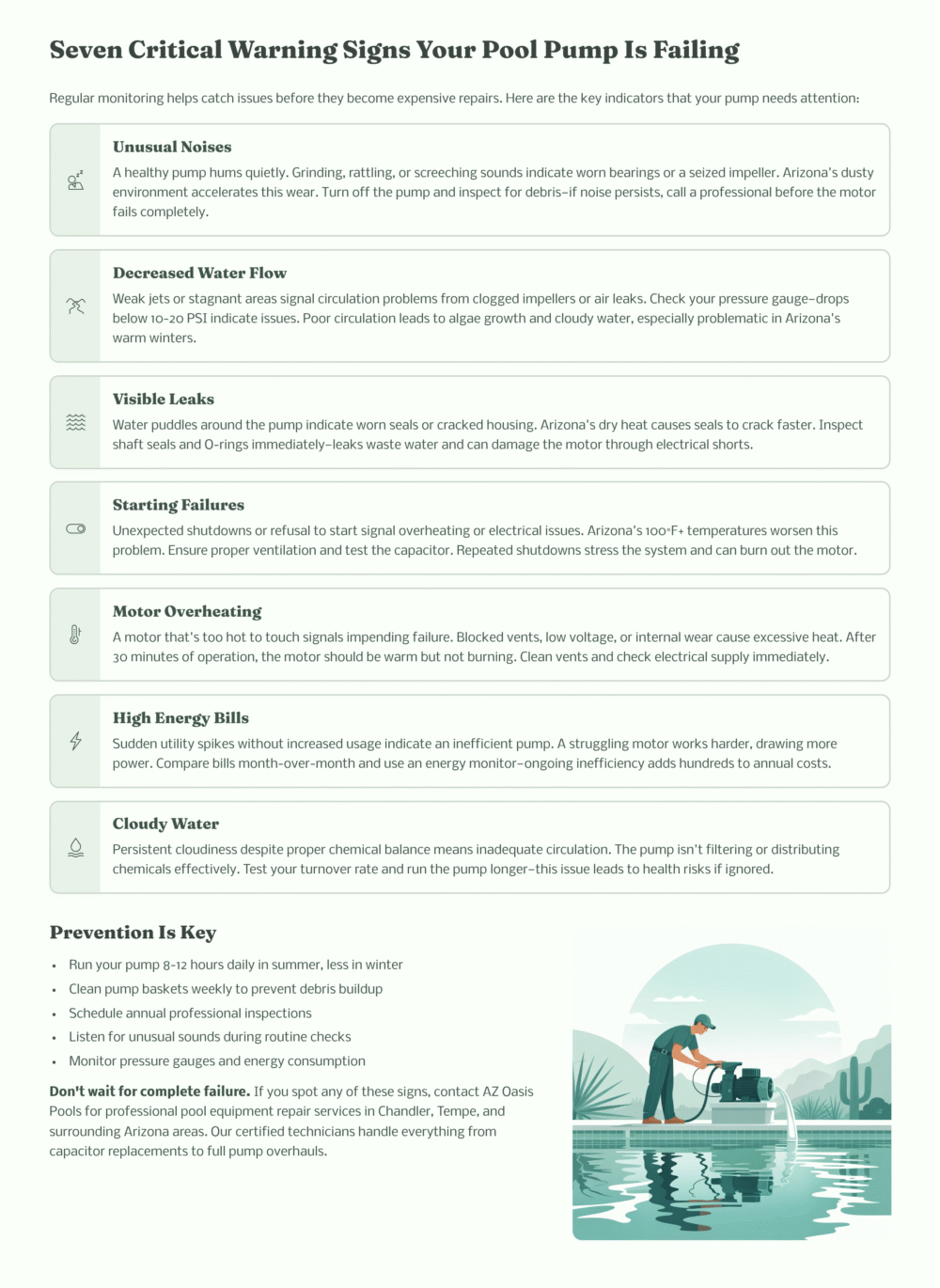
Sign 1: Unusual Noises from the Pump
One of the earliest and most noticeable signs is strange sounds. A healthy pool pump should hum quietly. If you hear grinding, rattling, screeching, or a loud humming without the pump starting, it’s a red flag.
- Why it happens: Grinding often indicates worn bearings in the motor, while a humming noise could mean a failing capacitor or seized impeller due to debris buildup. In Arizona’s dusty environment, sand and dirt can accelerate this wear.
- What to check: Turn off the pump and inspect for loose parts or debris in the basket. If the noise persists, it might be time for a professional inspection.
- Impact if ignored: Continued operation can lead to complete motor failure, turning a simple repair into a full replacement.
Pro tip: During your seasonal maintenance, like following our Seasonal Pool Maintenance Checklist for Arizona Winters, listen for these noises as part of your routine checks.
Sign 2: Decreased Water Flow or Poor Circulation
If your pool’s water isn’t circulating properly—evidenced by weak jets, slow filtration, or stagnant areas—your pump might be failing.
- Why it happens: This could stem from a clogged impeller, air leaks in the suction line, or a weakening motor. Low flow reduces filtration efficiency, leading to algae growth or cloudy water.
- What to check: Clean the pump basket and filter. Measure the pressure gauge; a drop below normal levels (typically 10-20 PSI for most systems) is a clue.
- Impact if ignored: Poor circulation can cause green pools, especially in Arizona’s warm winters when algae can still thrive.
If flow issues persist, our pool equipment repair experts can diagnose and fix impeller or seal problems quickly.
Sign 3: Leaks Around the Pump
Spotting water puddles under or around the pump housing is a clear indicator of trouble.
- Why it happens: Leaks often come from worn seals, cracked housing, or loose connections. In Arizona’s dry heat, seals can dry out and crack faster.
- What to check: Inspect the shaft seal (where the motor meets the wet end) and O-rings. Tighten fittings if possible, but avoid over-tightening.
- Impact if ignored: Leaks waste water and can damage the motor through electrical shorts, leading to expensive repairs.
Regular winter maintenance, as outlined in our Arizona winters checklist, includes inspecting for leaks to catch them early.
Sign 4: Frequent Shutdowns or Failure to Start
Does your pump shut off unexpectedly or refuse to start? This intermittent behavior is a common early sign.
- Why it happens: Overheating due to poor ventilation, electrical issues, or a faulty capacitor can trigger thermal overload protection. In Arizona, ambient temperatures over 100°F exacerbate this.
- What to check: Ensure the pump area is clear of debris for airflow. Test the capacitor with a multimeter if you’re comfortable.
- Impact if ignored: Repeated shutdowns stress the system, potentially burning out the motor.
For persistent starting issues, schedule a service with AZ Oasis Pools’ pool equipment repair team to avoid downtime.
Sign 5: Overheating Pump Motor
A hot-to-the-touch motor (beyond normal warmth) signals impending failure.
- Why it happens: Blocked vents, low voltage, or internal wear cause excessive heat. Arizona’s intense sun can make external factors worse.
- What to check: Feel the motor after 30 minutes of operation—it shouldn’t burn your hand. Clean vents and check electrical supply.
- Impact if ignored: Heat damages windings and bearings, leading to total breakdown.
Incorporate overheating checks into your winter routine from our Seasonal Pool Maintenance Checklist for Arizona Winters.
Sign 6: Increased Energy Bills
A sudden spike in your utility bill without increased usage could point to an inefficient pump.
- Why it happens: A struggling motor works harder, drawing more power. Worn parts like impellers reduce efficiency.
- What to check: Compare bills month-over-month. Use an energy monitor on the pump circuit.
- Impact if ignored: Ongoing inefficiency adds hundreds to annual costs, plus eventual replacement.
Energy audits are part of our comprehensive pool equipment repair services.
Sign 7: Cloudy or Dirty Pool Water
If your water turns cloudy despite regular chemical balancing, the pump might not be circulating effectively.
- Why it happens: Reduced flow fails to distribute chemicals or filter debris properly.
- What to check: Run the pump longer and test turnover rate (pool volume divided by flow rate).
- Impact if ignored: Leads to health risks and more frequent cleanings.
This ties directly to preventive maintenance—see our guide on Seasonal Pool Maintenance Checklist for Arizona Winters for tips on keeping water clear year-round.
What to Do If You Spot These Signs
Don’t wait for a complete failure. Shut off the pump, isolate the issue if possible, and call professionals. DIY fixes like cleaning baskets are fine, but electrical or internal repairs require expertise to avoid voids in warranties or safety hazards.
At AZ Oasis Pools, our certified technicians handle everything from capacitor replacements to full pump overhauls. Visit our pool equipment repair page for more details or to schedule a service in Chandler, Tempe, or surrounding areas.
Prevention Tips
- Run your pump daily for 8-12 hours in summer, less in winter based on temperature.
- Clean baskets weekly.
- Schedule annual professional inspections.
- Follow seasonal checklists to extend equipment life.
By staying vigilant, you can avoid emergencies and enjoy your pool hassle-free. For more on winter prep, check our Seasonal Pool Maintenance Checklist for Arizona Winters.
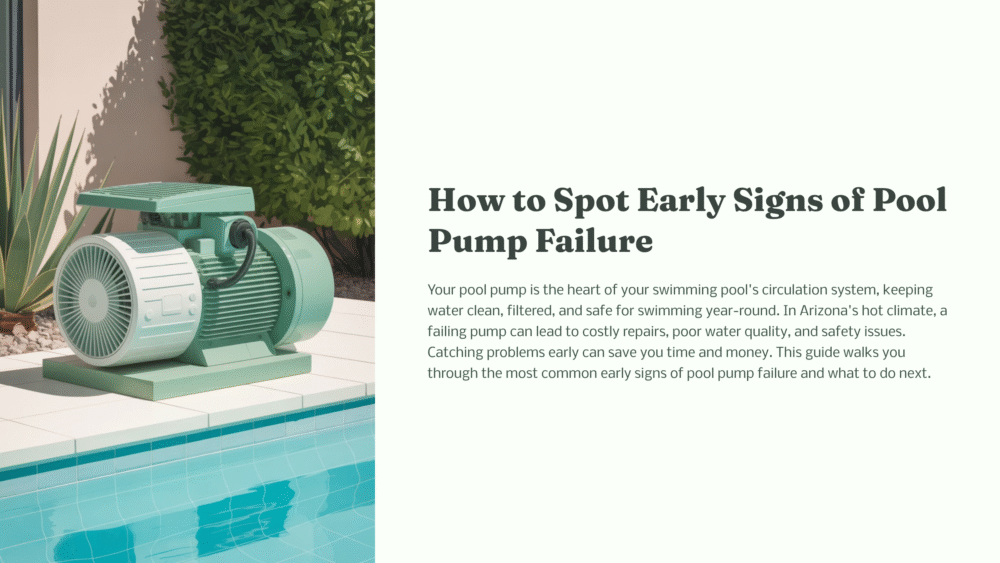
Common Symptoms of a Pool Pump Not Working in Arizona
Identifying issues early prevents escalation. In our hot, dusty climate, symptoms often appear suddenly due to environmental triggers. Here’s what to watch for in your pool pump:
- Noisy Operation: Grinding, humming, or screeching sounds indicate bearing wear or debris in the pump motor. Arizona dust exacerbates this, causing friction in motors. A humming pool pump is a classic sign of capacitor failure or a seized impeller.
- Low or No Water Flow: Weak jets or still water suggest clogs, air leaks, or impeller damage in the pool pump. In the summer, this leads to rapid heating and algae. Low water flow is one of the most common pool pump issues, often tied to a clogged filter or strainer basket.
- Complete Shutdown: Pool pump won’t start—could be electrical issues, overheating (common in AZ’s 100+°F days), or seized parts like the motor shaft.
- Leaking Water: Drips around seals or the pump housing indicate worn gaskets, exacerbated by dry air and rubber cracking. Check the pump lid and shaft seal for cracks.
- High Energy Bills: A struggling pool pump draws more power; monitor via your utility app. In Phoenix, average pool pumps use 1,500-3,000 kWh annually, especially for inground pool pumps or ground pool pumps.
- Overheating: Pump body hot to the touch—thermal overload from dust-blocked vents or prolonged high temps. This is frequent with swimming pool pumps in hot tubs or larger systems.
Document symptoms with notes or videos. The U.S. Department of Energy offers insights on energy-efficient pumps: https://www.energy.gov/energysaver/pool-pumps. Ignoring these can lead to full-system failure or green pools—see our guide on why pools turn green.
Step-by-Step Troubleshooting for AZ Pool Pumps
Troubleshoot safely: turn off the power at the breaker, wear gloves, and avoid water near electrical equipment. These steps address Arizona’s dust and heat, focusing on common pool pump issues.
- Safety First and Basic Checks: Confirm power supply—test outlet with a voltmeter (120/240V). Check timer settings or automation apps. In AZ monsoons, inspect for storm damage to the pool pump.
- Inspect for Obvious Issues: Clean skimmer and pump basket of dust/debris (common culprit here). Look for air leaks in the pump lid or o-rings—dry climate dries them out. The strainer basket is key for maintaining water flow.
- Prime the Pump: If air-locked (from low water level), fill strainer basket with hose water, reseal the pump lid, and restart. Run on high speed initially to restore water flow.
- Check for Clogs: Disassemble strainer and inspect pump impeller for blockages (twigs, dust clumps). Use a screwdriver to spin the motor shaft manually—if stuck, debris or seizure in the pump body.
- Test Electrical Components: Use a multimeter for continuity in wiring/capacitor. Overheating? Clean vents of dust buildup, a weekly task in AZ for pool pumps.
- Monitor Pressure: Gauge reading zero? Clog or air leak issue. High pressure? Dirty filter—backwash immediately. This ties into filter systems and overall pool maintenance.
If left unresolved, it may lead to leaks that dilute pressure—see our pool leak detection guide. The Occupational Safety and Health Administration (OSHA) stresses electrical safety around pools: https://www.osha.gov/pools-spas. Most fixes take 30-60 minutes; if the pool pump runs but there is no flow, a professional diagnosis is needed for pump issues.
Repair vs. Replacement: Options and Costs in Arizona
Decide based on age, extent, and efficiency. In AZ, energy costs make upgrading your pool pump worthwhile.
- Repair Costs: Minor (seals, bearings): $100-300. Capacitor/motor: $200-500. Pump impeller: $150-400. Labor in Valley: $75-150/hour.
- Replacement Costs: New pool pump: $400-1,200 (variable-speed models save 50-90% energy). Installation: $200-500. Total: $600-1,700. Consider inground pool pumps or cover pumps for specific needs.
Repair if under 5 years old and the issue is isolated; replace older units or upgrade efficiency (e.g., from single-speed to variable). AZ rebates via utilities like SRP can offset $100-300 for efficient models. The Pool & Hot Tub Alliance (PHTA) recommends variable-speed systems for desert climates: https://www.phta.org/standards-and-codes/. Factor in warranties—most are 1-3 years—and local installation codes, especially for new pool setups or pool opening seasons.
Arizona State University’s research on desert energy use supports the use of efficient technologies: https://energy.asu.edu/. Regular maintenance extends the life of your pool; at AZ Oasis Pools, our repair services include dust-proofing and inspections of pool accessories such as robotic cleaners, pool lights, pool covers, and pool decks.
We don’t just clean pools—we manage your water like it’s our own. Homeowners across Queen Creek, San Tan Valley, and Chandler choose AZ Oasis because we deliver the next level of care.
Here’s what you get with us—every visit, every time:
-
📸 Real-time digital service reports with before-and-after photos and water test results
-
🛠️ Certified pool technicians with 10+ years of Arizona desert pool experience
-
⚡ Same-day emergency support for pump, heater, or automation issues
-
🌿 Eco-friendly, non-toxic cleaning products safe for kids, pets, and desert wildlife
-
🗓️ Flexible scheduling and recurring reminders so you never miss a visit
Our pool techs don’t just show up—they show results. That’s why full-time residents, snowbirds, and vacation rental owners alike trust us.
💬 Still Guessing on Pool Care? We’ve Got You Covered.
Get clear water, reliable service, and expert care—all from one trusted local team. Whether you’re a full-time resident or managing a rental property, AZ Oasis Pools keeps your pool safe, balanced, and swim-ready all year.
📞 Ready to get started?
📅 Schedule your free consultation →
🔍 Explore our full-service plans →
👨🔧 Meet your local pool techs →
Get Comprehensive Pool Services from AZ Oasis Pools
Ready to revitalize your pool? AZ Oasis Pools offers comprehensive pool services, from resurfacing to routine maintenance, designed to keep your Arizona pool in top shape.
Learn more about AZ Oasis Pools’ dedication to excellence and community and see why they are Arizona’s go-to for professional pool cleaning and other services. Contact AZ Oasis Pools today to schedule your free consultation and get a quote for pool resurfacing.
Talk to their pool experts in Phoenix and discover why they are simply the best pool cleaners in Arizona.
💦 Full-Service Pool Maintenance Tailored to Arizona Pools
AZ Oasis Pools provides thorough weekly cleaning, expert water balancing, and equipment checks designed for Arizona’s harsh climate. Learn about their full-service options here: Pool Services →
🏆 Why Locals Trust AZ Oasis Pools
With over 500 5-star reviews, the AZ Oasis Pools’ team is known for showing up on time, doing the job right, and communicating every step. Learn more about their mission: About AZ Oasis →
📞 Book Your Free Pool Cleaning Estimate
Ready to dive in? Their friendly staff is ready to get you started. Reach out now and schedule your on-site quote: Call Today →
Don’t wait for problems to escalate—get a free consultation and quote. Partner with a team that knows what your pool needs—before it needs it. AZ Oasis Pools delivers proactive service, reliable results, and real peace of mind.