
Pool Leak Detection: Cost, Signs, and Solutions
As an Arizona pool owner, few things are more concerning than discovering your pool is losing water faster than normal evaporation can explain. In our dry, hot climate, where pools are a vital escape from the heat, a leak can lead to skyrocketing water bills, structural damage, and even safety hazards. Pool leaks are surprisingly common in the Grand Canyon State due to factors like shifting soil, extreme temperature fluctuations, and aging materials. But the good news is that early detection and repair can save you thousands over time.
In this in-depth guide, we’ll cover the telltale signs of a pool leak, DIY detection methods suited for Arizona conditions, average costs for detection and repairs, professional solutions, and prevention tips to protect your investment. Whether you’re in Chandler, Queen Creek, or San Tan Valley, understanding these aspects will help you act swiftly and maintain your backyard paradise.
Arizona’s unique geology and weather amplify leak risks. The state’s expansive clay soils expand and contract with moisture changes, stressing pool shells during monsoons or dry spells. Summer heat can crack vinyl liners or concrete, while winter freezes (rare but possible in northern AZ) can exacerbate the problem. According to industry data, up to 30% of pools develop leaks within 10 years, and in arid regions like ours, undetected leaks waste an average of 100,000 gallons per pool annually—enough to fill it multiple times. Prompt action conserves water and complies with Arizona’s water conservation guidelines amid ongoing droughts.
In 2025, the U.S. Environmental Protection Agency (EPA) reports that residential swimming pools account for up to 30% of outdoor household water use, with undetected pool leaks contributing to an average annual loss of 8,000–14,000 gallons per affected pool nationwide. We stop that loss before it escalates. This comprehensive guide breaks down costs, warning signs, and real-world solutions—all backed by 2025 data from Angi, HomeGuide, and Thumbtack—so you know exactly when to act and why AZ Oasis Pools delivers the best pool service in Phoenix, AZ.
Arizona’s 110°F summers accelerate evaporation, masking pool leaks that can waste hundreds of gallons daily. We see it weekly during swimming pool cleaning in AZ: a 1/4-inch drop per day equals 378 gallons lost—that’s $45–$90/month in water bills alone at current Phoenix utility rates. Angi’s 2025 Cost vs. Value Report shows that pool leak detection averages $100–$500, while repairs range from $239–$5,000, with 80% of homeowners spending under $2,500 when detected early. Delay? You’re looking at structural damage, $10,000+ in resurfacing costs, or a full pool replacement.
We bundle leak checks into every pool cleaner service—no extra charge for initial diagnostics. Our ROC# 337086 certification and IPSSA membership mean insured, guaranteed work.
| Leak Severity | Annual Water Loss | Estimated Cost (Water + Damage) | Detection Cost |
|---|---|---|---|
| Minor Surface Crack | 2,000–5,000 gal | $300–$800 | $100–$250 |
| Plumbing Line Leak | 8,000–15,000 gal | $1,200–$4,000 | $300–$600 |
| Structural Shell Failure | 20,000+ gal | $10,000–$25,000 | $500–$1,000 |
Top 10 Warning Signs of a Leaky Pool – Spot Them Before Disaster
We train every technician to scan for these during professional pool cleaning. Miss one? You’re gambling.
- Unexplained Water Loss – More than 1/4 inch per day after accounting for evaporation (0.25–0.35 inches normal in Phoenix summer).
- Air Bubbles in Returns – Plumbing suction leaks pull air in.
- Soggy Ground Around Pool – Especially near equipment pads or skimmers.
- Cracks in Deck or Coping – Shifting soil from underground leaks.
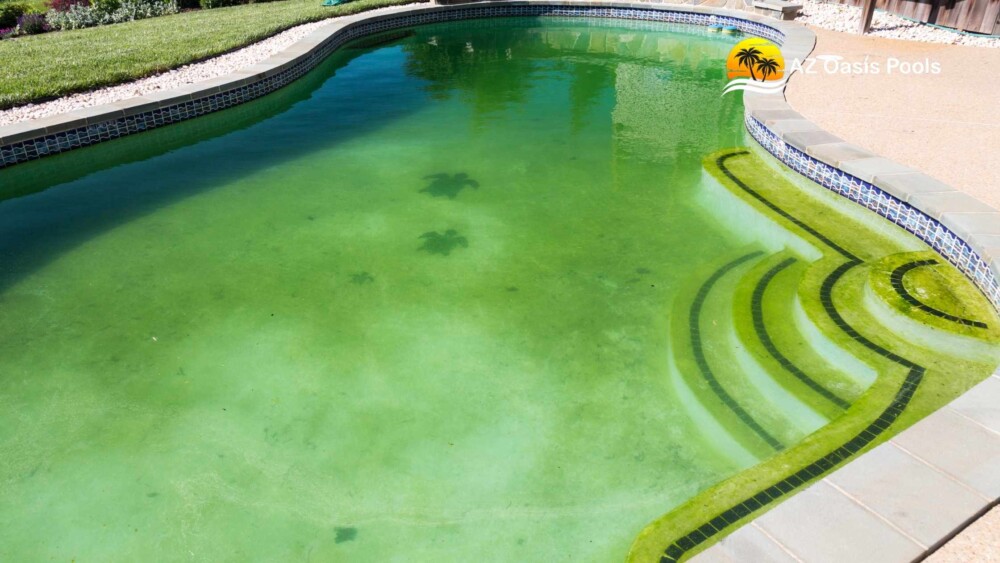
- Algae Growth Despite Clean Water – Leaks stir sediment.
- Rising Water Bills – $50+ spikes unexplained.
- Loose Tiles or Grout – Hydrostatic pressure from leaks.
- Pump Running Longer – Compensating for lost prime.
- Visible Drips at Fittings – O-rings, valves, lights.
- Erosion Under Pool Shell – Sinkholes forming.
Thumbtack’s 2025 Pool Pro Survey found 1 in 3 Arizona pools show at least one sign annually, with 72% undetected until $1,000+ damage occurs .
Pro Insight: We use infrared thermal imaging during swimming pool cleaning services to spot temperature anomalies—cold spots = escaping water.
2025 Pool Leak Detection Costs: DIY vs. Professional
We empower homeowners with DIY options, but pro detection saves time, accuracy, and money long-term.
DIY Detection Costs
- Bucket Test: $0 (use household bucket)
- Food-Grade Dye: $8–$15 (pool store)
- Submersible Listening Device: $30–$60 (Amazon)
- Pressure Gauge Kit: $45–$80
Total DIY Investment: Under $100 Accuracy: 60–75% for surface leaks
Professional Detection Costs (AZ Oasis Pools)
- Visual + Bucket/Dye Combo: $100–$150 (included in pool cleaning services)
- Electronic Listening (Geophone): $250–$400
- Pipeline Camera Inspection: $350–$550
- Helium Tracer Gas Test: $500–$800 (for deep underground lines)
Angi 2025 Average: $378 for full electronic detection in the Phoenix metro. We beat that with bundled pricing.
Why Pay Pro? HomeAdvisor 2025 reports that DIY misdiagnoses lead to an average of $1,200 in wasted repairs.
Pool Leak Repair Solutions: From Patches to Full Restoration
We tailor solutions to leak type, pool material, and budget. No cookie-cutter fixes.
Surface Crack Repairs (Plaster, Pebble, Fiberglass)
- Epoxy Injection: $200–$600 | 1-day fix | 5-year warranty
- Underwater Patch Kits: $300–$800 | No drain needed
- Resurfacing (Pebble Tec®): $8,000–$12,000 | 15–20 year lifespan
We use AquaBond® underwater adhesives—cures in 30 minutes, no draining.
Plumbing Line Repairs
- Spot Repair (PVC/ABS): $400–$1,200 | Trenchless options available
- Pipe Rerouting: $1,500–$3,500 | Bypasses damaged sections
- Full Repipe: $4,000–$7,000 | Rare, but lasts 50+ years
Our no-dig trenchless technology saves lawns and decks in Gilbert and Chandler.
Structural Shell Repairs
- Carbon Fiber Staples: $2,500–$6,000 | Reinforces cracks
- Full Shell Replacement: $25,000+ | Only for catastrophic failure
2025 Pool & Spa News: Trenchless repairs now account for 65% of pro jobs, reducing labor costs by 40%.
Cost-Saving Strategies from AZ Oasis Pools
- Bundle with Weekly Cleaning – $50 off detection
- Annual Leak Inspection Plan – $299/year (includes 4 checks + priority repair)
- Eco-Friendly Sealants – Extend repair life 3x
- Insurance Claims Support – We provide documentation to support the homeowner’s insurance coverage.
Result? Average client saves $1,800 over 3 years.
Recognizing symptoms early is crucial, as leaks often start small but worsen quickly in our environment. Here are the key indicators to watch for:
- Unexplained Water Loss: If your pool drops more than 1/4 inch per day (beyond evaporation), it’s suspect. In Arizona’s low-humidity summers, normal evaporation is 1/4-1/2 inch weekly—track levels with a marked bucket on the steps.
- Higher Water Bills: A sudden spike in your utility bill without increased usage points to leaks. In Phoenix metro areas, where water rates average $3-5 per 1,000 gallons, a moderate leak can add $100+ monthly.
- Wet Spots or Soggy Ground: Look for damp soil, grass die-off, or erosion around the pool deck, equipment pad, or nearby landscaping. In our desert terrain, this moisture attracts pests like termites.
- Cracks or Structural Changes: Visible fissures in tiles, plaster, or coping; uneven decking; or air bubbles in the pump could signal underground leaks.
- Equipment Issues: Low water pressure, gurgling sounds in pipes, or constant auto-fill activation are red flags. Arizona’s hard water can corrode fittings, leading to slow drips.
- Algae or Clarity Problems: Persistent green water, despite treatment, might indicate a fresh water influx from a leak diluting chemicals.
If you notice these, document with photos and measurements. The Arizona Department of Water Resources offers tools for tracking usage: https://new.azwater.gov/conservation/residential/pool-water-use.
Ignoring signs can lead to foundation damage or sinkholes, especially in expansive soils common in Maricopa County.
DIY Detection Methods for Arizona Pools
Before professional help, try these safe, cost-effective tests adapted for our climate. Perform them during mild weather to minimize evaporation variables.
- Bucket Test: Place a bucket on a pool step, fill to match the pool level, and mark both. After 24 hours (pump off), compare drops—if the pool loses more, it’s leaking. In AZ heat, do this shaded and note temps.
- Dye Test: Add food coloring near suspected areas (e.g., lights, returns) with pump off. Watch for dye pulling into cracks—indicating suction-side leaks.
- Pressure Test: For plumbing, use a plug kit to isolate lines and pressurize with air or water. A pressure drop signals leaks. Rent tools from home stores.
- Evaporation Calculation: Use online calculators factoring AZ humidity (often <20%) to baseline normal loss. If actual exceeds, investigate.
- Listening Device: A simple stethoscope or hydrophone app can detect hissing from underground pipes.
According to pool professionals, these methods are effective in detecting 70% of leaks. For safety, the Occupational Safety and Health Administration (OSHA) advises caution when working with electrical components: https://www.osha.gov/pools-spas.
If DIY fails, pros use advanced tech like electronic listening or dye injection.
Average Costs for Pool Leak Detection and Repair in Arizona
Costs vary by leak type, pool material (gunite, fiberglass, vinyl), and location. In Arizona, expect higher rates due to travel in rural areas like Queen Creek.
- Detection Costs: Basic DIY: $0-50 (supplies). Professional: $200-500 for standard tests; $500-1,000 for advanced (geophones, cameras). Average in Phoenix: $350.
- Repair Costs: Minor patches (liners): $200-500. Plumbing fixes: $300-800. Structural (cracks): $500-2,000. Full resurfacing: $5,000-10,000. Add 10-20% for AZ’s labor premiums.
Factors: Pool size (larger = pricier), accessibility (underground vs. surface), and urgency. Vinyl pools leak more from tears; concrete from cracks due to soil shifts.
Budget for post-repair refills—AZ water costs $0.003-0.005/gallon. Insurance may cover if not wear-related.
The Pool & Hot Tub Alliance (PHTA) provides cost benchmarks: https://www.phta.org/standards-and-codes/.
Professional Repair Options and Solutions
For confirmed leaks, pros offer tailored fixes:
- Patch and Seal: Epoxy or silicone for small cracks—quick, under $500.
- Plumbing Replacement: Re-pipe lines if corroded; $500-1,500.
- Liner Replacement: For vinyl pools, full swap: $3,000-6,000.
- Resurfacing: Aggregate or plaster redo for concrete pools: $4,000-8,000. Ideal for AZ’s sun-faded surfaces.
- Structural Reinforcement: Fiberglass overlays or rebar for severe damage: $2,000+.
At AZ Oasis Pools, we use non-invasive methods like endoscopic cameras for precise fixes, minimizing disruption. Our services cover Chandler to Gilbert—eco-friendly sealants reduce water waste.
The Environmental Protection Agency (EPA) promotes leak-proof designs: https://www.epa.gov/watersense/outdoor-water-use#Pools.
Arizona-Specific Prevention Tips
Prevent leaks with these strategies:
- Regular Inspections: Bi-annual checks for cracks, especially post-monsoon.
- Soil Stabilization: Use expansion joints in decks to accommodate shifts.
- Quality Materials: Opt for UV-resistant liners and sealants rated for desert heat.
- Water Level Management: Keep consistent to avoid stress on walls.
- Professional Maintenance: Annual tune-ups catch issues early.
Universities like Arizona State offer soil studies: https://sese.asu.edu/research/earth-surface-processes.
Essential Leak Prevention Checklist for AZ Pool Owners
Here’s a practical list to safeguard your pool:
- Monthly: Monitor water levels, inspect for wet spots, and check equipment for noises.
- Quarterly: Pressure test lines, clean expansion joints, and test auto-fill systems.
- Annually: Hire pros for dye/electronic detection, resurface if wear shows, update seals.
- Seasonally (Pre-Monsoon): Secure loose fittings, clear debris, and add stabilizers.
- Ongoing: Maintain balanced chemistry to prevent corrosion; use covers to reduce evaporation.
Adhering cuts leak risks by 60%, per industry reports. Pool leaks in Arizona require prompt attention to prevent waste and damage. By spotting signs such as water loss, using DIY tests, understanding costs ($200-10,000), and opting for professional repairs, you’ll restore efficiency. Prevention through checklists and maintenance ensures longevity in our challenging climate. Facing a potential leak? Explore our pool resurfacing options or contact AZ Oasis Pools for a free assessment today. Protect your oasis—act now!
Ready to Stop Leaks and Save Thousands? Contact AZ Oasis Pools Today!
AZ Oasis Pools isn’t just a pool cleaning company—we’re your partner in pool longevity. With 18+ years, a degreed hydrologist owner, and eco-friendly practices, we serve Phoenix, Scottsdale, Tempe, Gilbert, Chandler, Queen Creek, San Tan Valley, and Ahwatukee with unmatched reliability. Explore our full pool services—from weekly cleaning to equipment upgrades.
Why trust us? We are a family-owned business, fully insured, hold ROC# 337086, and have received over 1,000 five-star reviews. We even offer Pool School—free education so you understand your system. Learn more on our About AZ Oasis page.
Act now: Schedule your FREE leak inspection today! Call 480-694-1158 or visit our office: 4611 E Chandler Blvd #112-172, Phoenix, AZ 85048. Same-day service available. No leaks. No stress. Just swim.