
Pool Filter Repair and Maintenance in Arizona
As an Arizona pool owner, your filter is the unsung hero of your backyard oasis, tirelessly removing dirt, debris, and contaminants to keep water crystal clear amid our dusty desert winds and intense heat. But when filters underperform or break down, issues like cloudy water, algae growth, or strained pumps can quickly follow. In Arizona’s harsh climate—where fine sand from haboobs clogs systems faster and high evaporation concentrates minerals—filter problems are more prevalent than in cooler, less arid regions. This ultimate guide dives deep into types of pool filters, common issues specific to AZ pools, DIY maintenance and repair steps, costs, professional solutions, and prevention strategies. Whether you’re in Tempe, Ahwatukee, or San Tan Valley, mastering filter care will extend your equipment’s life, reduce energy costs, and ensure safe, sparkling swims year-round.
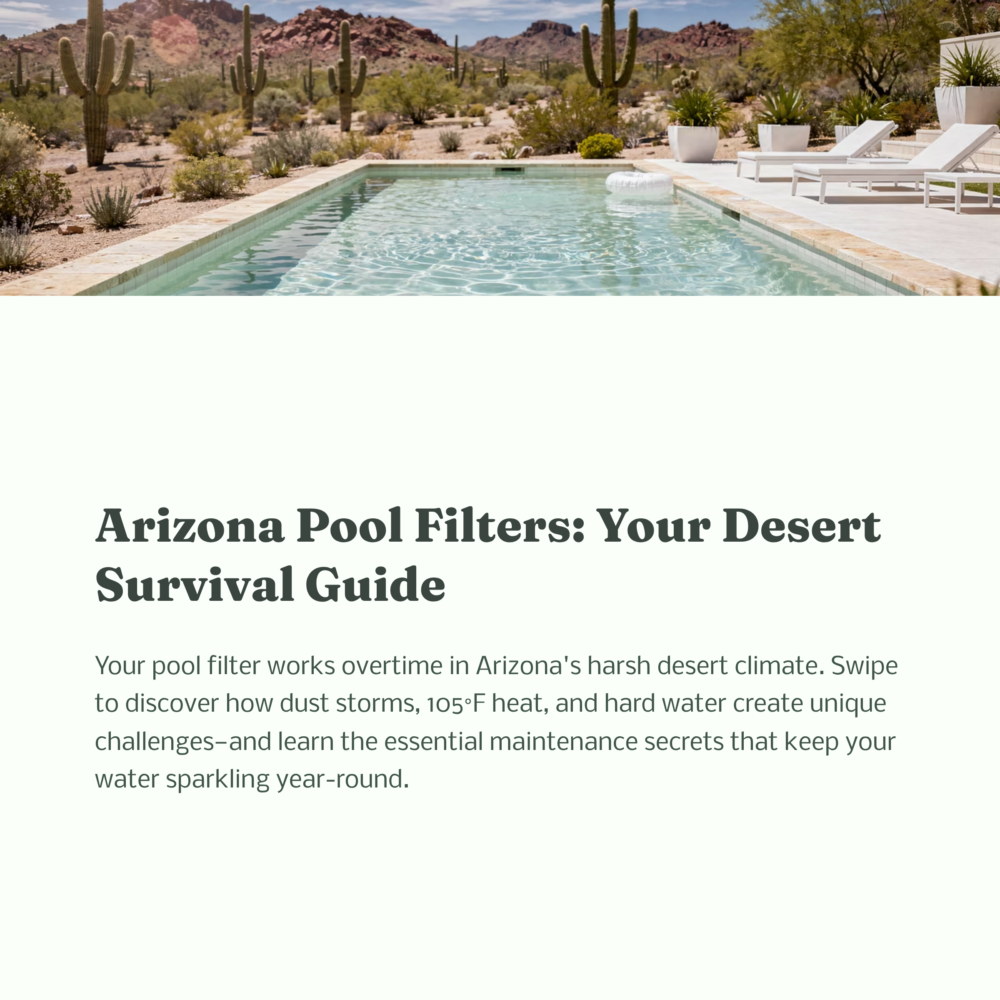
Arizona’s environment demands robust filter maintenance. Our low humidity and high temperatures (averaging 105°F in summer) accelerate debris buildup, while calcium-rich hard water from sources like the Salt River causes scaling that restricts flow. Dust storms can overload filters overnight, and monsoon rains introduce organic matter that fosters bacteria. According to the Arizona Department of Environmental Quality (ADEQ), poorly maintained filters contribute to water quality violations in residential pools, potentially leading to health concerns. Regular care not only prevents these but can save 20-30% on energy bills by keeping systems efficient. Neglect, however, shortens a filter’s 5-10 year lifespan to as little as 2-3 years in our conditions.
Types of Pool Filters and Common Issues in Arizona
Understanding your filter type is key to effective care. Arizona pools commonly use three main systems, each with vulnerabilities in our climate:
- Sand Filters: Use silica sand to trap particles down to 20-40 microns. Common AZ issues: Dust clogs sand beds quickly, reducing efficiency; backwashing wastes water amid droughts; mineral buildup requires frequent media changes (every 3-5 years).
- Cartridge Filters: Pleated fabric cartridges capture finer debris (10-15 microns). Problems here: Dust and pollen overload cartridges faster in windy seasons; heat warps elements if not shaded; cleaning is labor-intensive but water-efficient.
- Diatomaceous Earth (DE) Filters: DE powder coats grids for ultra-fine filtration (2-5 microns). Drawbacks in AZ: DE clumps in hard water, requiring additives; monsoon humidity can cause caking; recharge needed after backwashing.
Across types, universal issues include low pressure from clogs, high pressure from scaling, leaks from cracked housings (due to soil shifts), and bacterial growth in neglected units. In our desert, UV exposure degrades plastic components, while infrequent rain means less natural flushing.
For filtration basics, the National Sanitation Foundation (NSF) certifies standards.
Poor filtration is often tied to green pools or pump strain—reference our guides on those topics for related fixes.
DIY Maintenance Tips for Arizona Pool Filters
Routine upkeep prevents major repairs. These steps are tailored for AZ’s dust and heat; always shut off power and release pressure first.
- Visual Inspection: Weekly, check for cracks, leaks, or unusual noises. In summer, inspect for heat damage like warped lids.
- Cleaning Schedules: Sand: Backwash weekly (2-3 minutes) when pressure rises 8-10 psi. Cartridge: Rinse bi-weekly with hose; soak in cleaner monthly. DE: Bump handle daily; full breakdown/clean bi-monthly.
- Media Replacement: Sand: Change every 3-5 years ($100-200). Cartridge: Replace annually ($50-150). DE: Recharge after each clean (powder $20/bag).
- Pressure Monitoring: Use a gauge to track norms (10-20 psi clean). High? Clean/backwash. Low? Check for air leaks or pump issues.
- Additives for Hard Water: Use sequestering agents weekly to combat AZ minerals; test water hardness (ideal <400 ppm).
- Winter Prep: In mild AZ winters, run filters intermittently; cover to block dust.
These habits extend life by 50%. The Centers for Disease Control and Prevention (CDC) links clean filters to safer pools.
For chemistry balance aiding filtration, use our cheat sheet.
Repair Guide and Costs for Pool Filters in Arizona
When maintenance isn’t enough, repairs range from simple to complex.
- Common Repairs: Clog removal: $50-100 DIY. O-ring/gasket replacement: $20-50. Valve rebuild: $100-200. Grid/cartridge fix: $150-300.
- Full Overhaul Costs: Sand filter recharge: $200-400. Cartridge system: $300-600. DE grid replacement: $400-800. Labor in Valley: $80-150/hour.
DIY for basics like cleaning; pros for internal work to avoid voiding warranties. In AZ, costs 10-20% higher due to demand in summer. Factor in water refill post-backwash—conservation rebates are available via cities like Phoenix.
The Association of Pool & Spa Professionals (now PHTA) outlines repair standards.
If linked to leaks or pumps, cross-check those guides.
Arizona Challenges and Solutions for Pool Filters
Our state poses specific hurdles:
- Dust and Debris: Solution: Install pre-filters or skimmer socks; clean post-storms.
- Hard Water Scaling: Use sequestering agents; consider softeners for fill water.
- Heat and UV: Shade units; choose UV-resistant models. Variable-speed integrations reduce strain.
- Water Conservation: Opt for cartridge filters (no backwash waste); recycle backwash water for landscaping per ADEQ guidelines.
- Monsoon Impacts: Secure lids; add algaecides pre-rain to prevent post-storm clogs.
The Environmental Protection Agency (EPA) promotes efficient filters for sustainability.
At AZ Oasis Pools, our services include desert-adapted repairs, serving Chandler to Gilbert.
Essential Pool Filter Maintenance Checklist for Arizona Owners
Stay proactive with this checklist:
- Daily: Check pressure gauge, skim large debris.
- Weekly: Backwash/rinse as needed, inspect for leaks, test water balance.
- Monthly: Deep clean cartridges/DE grids, add scale preventers, lubricate o-rings.
- Quarterly: Replace worn parts (gaskets, clamps), test flow rates, clean housing.
- Annually: Full media change, professional inspection, efficiency audit.
- Seasonally (Summer): Increase cleanings for dust/heat, shade equipment.
- Post-Monsoon: Flush systems, check for water damage, recharge DE.
This cuts failures by 75%, ensuring longevity.
When to Call Professionals for Filter Repair
Call if:
- Pressure issues persist post-clean.
- Visible damage or leaks.
- System over 5 years without service.
AZ Oasis Pools offers expert repairs with AZ-specific tweaks—view locations for your area.
Conclusion
Mastering pool filter repair and maintenance in Arizona keeps your pool pristine despite dust and heat. From types and issues to DIY tips, costs ($50-800), and solutions, this guide empowers you. Use our checklist for routine care. Filter troubles? Explore our services or contact AZ Oasis Pools today. Enjoy clear water effortlessly!