
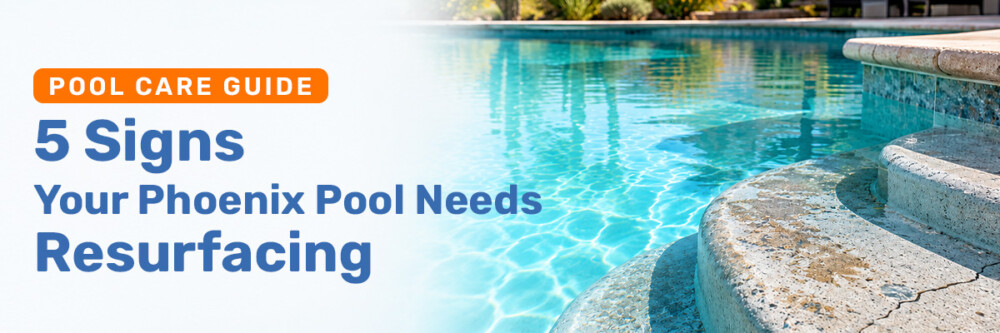
Your Phoenix pool works hard all year. That’s great news for those of us who like to enjoy a quick swim or family time around the pool whenever we can! It might not be the best news for your pool, though.
Over time, even a well-maintained pool finish can start showing its age more quickly in the Valley, especially with year-round use. The question is whether you are looking at a cosmetic issue that can be quickly repaired or a sign that it is time for pool resurfacing in Phoenix.
We are breaking it down for you so it’s easier to understand what that looks like for you as a homeowner, because, hey, not all of us can be expert pool technicians (leave that to us!).
Here are 5 signs your Phoenix pool needs resurfacing or at least some extra attention.
1. The Pool Surface Feels Rough
One of the easiest signs to spot is a pool surface that suddenly feels much rougher than it used to.
So start by running your hand along the steps, benches, walls, or shallow end. If the plaster feels gritty, pitted, sharp, or uneven, the finish may be wearing down.
You might also notice other swimmers complaining about scraped toes or snagged swimsuits. That is usually a pretty good clue that your pool floor has lost its smooth finish.
This is because Phoenix weather conditions can speed up surface wear. High temperatures increase evaporation, which means homeowners regularly add fresh water to their pools. Our local water contains minerals that can build up over time, especially when the pool chemistry is out of balance.
Some roughness may come from scale that can be treated. In other cases, the plaster itself has deteriorated. A pool professional can help determine what you are dealing with before you assume the entire pool needs resurfacing.
2. Stains Keep Coming Back
A random pool stain happens, but a collection of stains that refuses to leave is another story.
Pool plaster is porous, and it can become more susceptible to staining as it ages. Common causes include minerals, metals, leaves, debris, algae, and water chemistry issues.
Phoenix homeowners also have to contend with our mineral-rich water. Calcium and other minerals can leave deposits and staining on pool surfaces as water evaporates.
Some stains can be removed through cleaning or chemical treatment. However, deep stains that have worked their way into an older finish can become extremely difficult to remove completely.
If you have scrubbed, treated, and adjusted the water chemistry only to see the same ugly spots hanging around, the finish itself could be the problem.
Persistent staining is one of the more common signs that a pool needs resurfacing, especially when it appears alongside roughness or visible wear.
3. You See Cracks, Chips, or Areas of Missing Plaster
If you see a small crack, don’t ignore it! Pool finishes naturally experience wear as they age, but cracks, chips, flaking, and missing patches can indicate that the surface is beginning to fail.
Take a close look around:
- Steps
- Benches
- Corners
- Around fittings
- Near the waterline
- Across the pool floor
Small isolated areas may be candidates for pool plaster repair in Phoenix, AZ. Widespread cracking or deterioration can point toward resurfacing as the better long-term solution.
It is also important to figure out what kind of crack you are looking at. A surface crack in plaster is very different from a structural crack in the pool shell. If you notice a crack growing, water loss, or movement around the damaged area, have it inspected.
4. The Color Looks Faded, Blotchy, or Uneven
Remember when your pool finish had a clean, consistent color?
Phoenix sunshine remembers too, and it has been working on that finish every day.
Constant UV exposure, age, pool chemicals, minerals, and water conditions can gradually change the appearance of a pool surface. Darker finishes may fade unevenly. Lighter plaster can become blotchy, dull, or discolored.
You may notice areas that look noticeably lighter than the rest of the pool or spots where the original finish has lost its depth and uniform appearance.
Minor color variation does not automatically mean you need to resurface your pool. Once fading and discoloration become widespread, though, they can signal that the finish is reaching the end of its useful life.
And if you have spent years staring at a giant pale patch every time you walk into the backyard, resurfacing also gives you the chance to update the pool’s look. Everybody loves a makeover!
5. Your Pool Finish Is Simply Getting Old
Sometimes it’s less dramatic, and there’s no crack or giant stain. The finish has simply been through a lot of Phoenix summers.
Pool surfaces do not last forever. Their lifespan depends on the material, installation quality, water chemistry, maintenance, and overall pool conditions.
An aging finish may gradually become rougher, more porous, harder to clean, more prone to staining, and less consistent in appearance. That is why it helps to look at the pool as a whole.
If your older pool has rough areas, fading, recurring stains, small cracks, and patches that keep needing attention, resurfacing may make more sense than continuing to chase individual problems.
Does Every Damaged Pool Need Resurfacing?
No. The right solution depends on the condition of the finish and what’s causing the problem.
Scale can sometimes make a healthy finish feel rough. Certain stains can be treated, and small areas of damaged plaster may be repairable.
Resurfacing becomes worth considering when deterioration is widespread, the existing surface is reaching the end of its life, or repairs are starting to pile up.
A good inspection should help determine whether you need cleaning, a localized repair, water chemistry corrections, or complete pool resurfacing in Phoenix.
Phoenix Pools Have Their Own Set of Challenges
Pool ownership in the Valley comes with a few unique variables.
Our strong sun can affect finishes and water chemistry. High evaporation rates mean pools need frequent water replacement. Hard water contributes minerals that can create scale and deposits. Long swimming seasons also mean many Phoenix area pools stay active for much of the year.
All of that makes consistent maintenance especially important.
Watching your water chemistry, addressing scale early, keeping the pool clean, and paying attention to changes in the surface can help you catch problems before they become bigger projects.
Want to Know if Your Phoenix Pool Needs Resurfacing? Call Us!
For homeowners in Chandler, Tempe, Ahwatukee, Gilbert, Queen Creek, and San Tan Valley, AZ Oasis Pools brings more than 18 years of local, family-owned experience to caring for pools in our Arizona climate.
Pool problems have a way of rising to the surface. Good thing we know what to do when they get there! If you have questions, need a second option, or just want a weekly estimate, give us a call!